Time-independent threats: why third-party damage doesn't follow corrosion rules
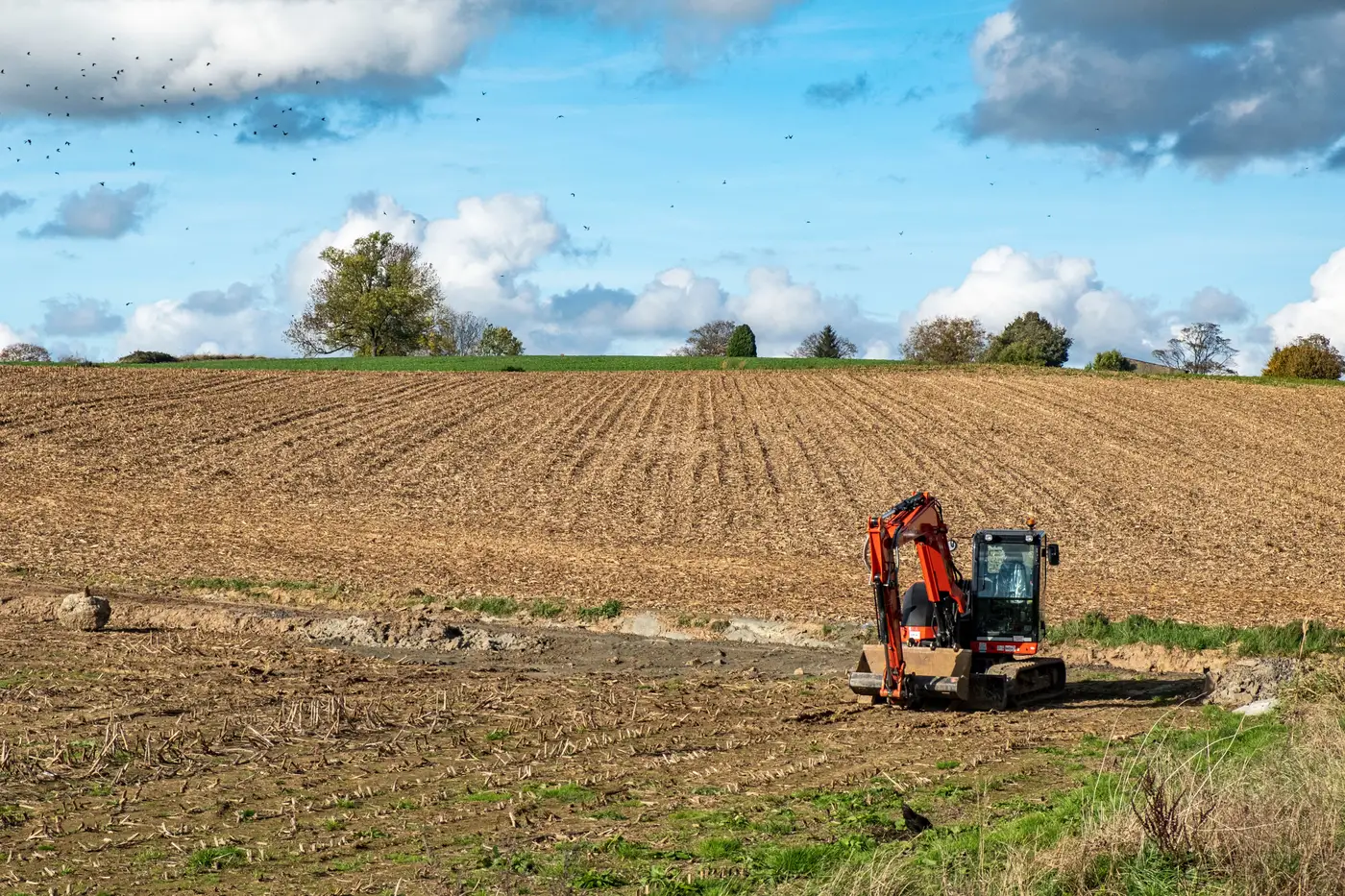
If you've built a threat matrix for a PHMSA integrity management plan, you've already sorted your pipeline's failure modes into B31.8S's three families: time-dependent, stable, and time-independent. Most of the budget conversation happens around the first two, because those are the ones a smarter inspection interval can actually fix. Third-party damage lives in the third bucket, and that's exactly why it keeps showing up on incident reports even on systems with a tight ILI program.
The three families, and where they diverge
B31.8S sorts threats into these three families by one variable: growth rate, how fast a defect worsens between the day you find it and the day you next look for it.
Time-dependent threats (internal corrosion, external corrosion, stress corrosion cracking) grow. A defect that's 20% through wall this year might be 35% in five years. That growth rate is modelable. It's why corrosion management leans on reassessment intervals: run the smart pig, size the metal loss, calculate a corrosion rate, set the next inspection date with some margin built in.
Stable threats (manufacturing defects, construction defects, equipment issues from the original build) are baked in at commissioning. They don't change size on their own. Once you've found and characterized them, the risk doesn't drift unless something else, pressure cycling, say, reactivates it.
Time-independent threats are the odd family out. Third-party damage, outside force (landslides, floods, seismic), incorrect operations. These don't grow between your inspection intervals. They occur, suddenly, and the pipe is either hit or it isn't. There's no "35% through wall this year, 50% next year" curve to extrapolate, because the mechanism isn't gradual material loss. It's a bucket, an auger, a frost line that punches through coating and wall in one event.
Why that makes third-party damage hard to manage with an interval
This is the part that trips people up on a risk model built around reassessment schedules. A time-dependent threat gives you a planning horizon. You know roughly how fast it's getting worse, so a five-year or seven-year ILI run is a defensible mitigation.
A time-independent threat gives you no such curve. The guy running a trencher 40 feet from your ROW today isn't going to be there in five years, or even in five weeks. He's there this week. Whatever "interval" you set for third-party damage monitoring isn't managing a growth rate. It's managing how long a hit sits unnoticed before someone finds it: a landowner call, a pressure anomaly, or, the outcome everyone's trying to avoid, a release.
That's the structural reason encroachment and excavation activity near buried assets get handled differently in a risk model than corrosion does. B31.8S doesn't ask you to predict when a dig-in happens. It asks you to shorten the gap between "digging starts" and "someone with authority finds out." Patrols, public awareness programs, one-call tracking, and aerial or satellite monitoring all exist to close that same gap by different means.
What "time-independent" actually changes in practice
For a corrosion threat, your mitigation is an engineering calculation: wall loss rate times years until next ILI run, compared against MAOP. For third-party damage, your mitigation is closer to a staffing and visibility problem: how fast does a crew find out equipment showed up near a segment, and how fast can an inspector get eyes on it before backfill covers the evidence.
That's also why a lot of integrity teams still lean on landowner calls or a one-off complaint as the first signal of an excavation threat. It works until it doesn't. By the time someone phones it in, the trench might already be backfilled over a coating gouge nobody saw. A weekly check on construction activity along the right-of-way closes that same gap without waiting on a phone to ring, which is the problem Pipeline Threat Alert was built to solve.
If third-party damage is the line item in your threat matrix you can least afford to manage on a lag, it's worth seeing what a dated, segment-by-segment briefing looks like before the next complaint call comes in.