Field notes: the Tuesday a hay baler looked like a trencher
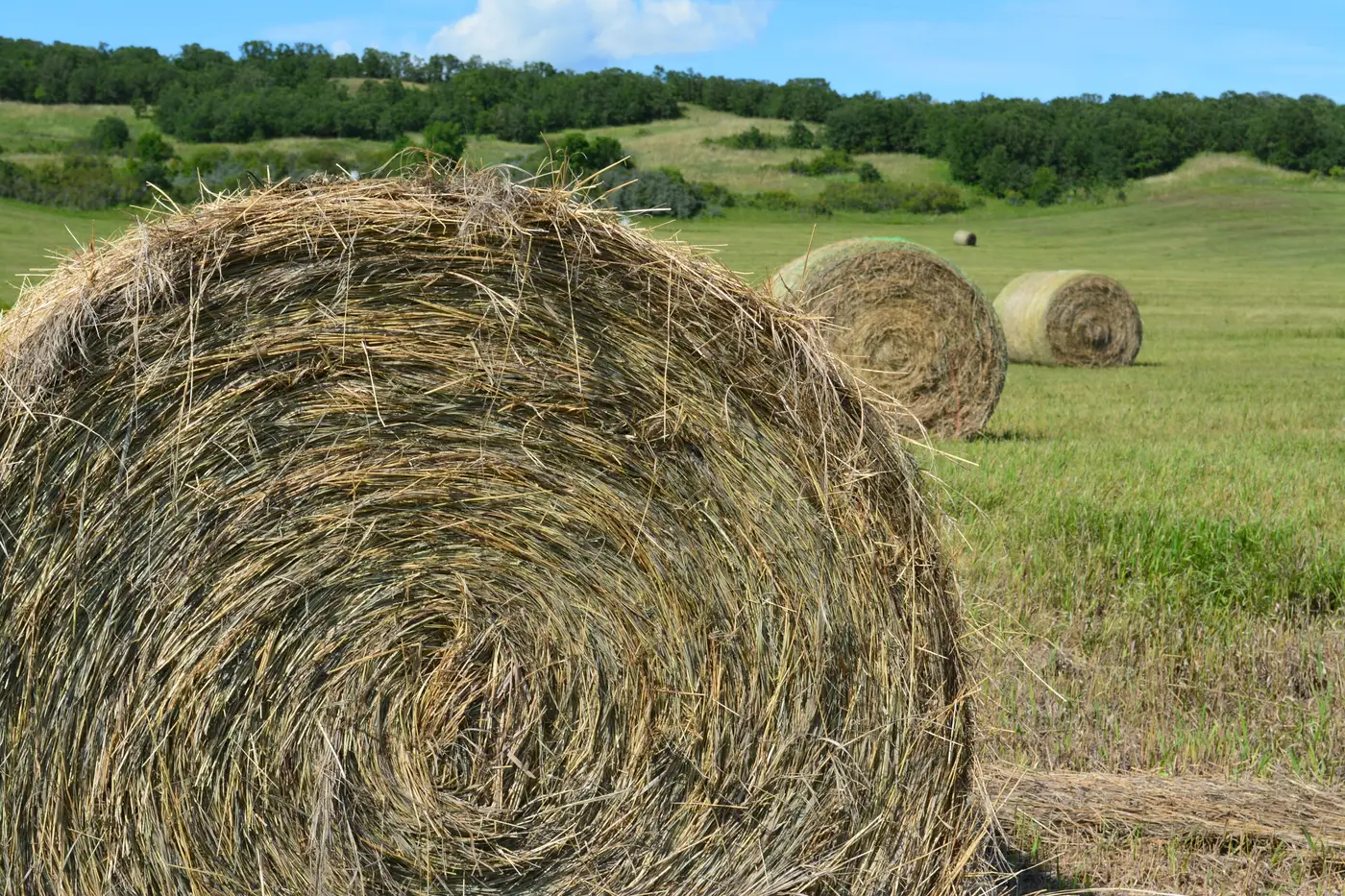
Tuesday, mid-July, a review of the weekly pass over a segment that runs through mixed row-crop and pasture ground in the eastern part of the system. One of the tiles comes back with a long, low shape sitting about forty feet off the fence line, parallel to the corridor, with a shadow that runs out at an angle that, at first glance, reads exactly like a boom.
That shape gets a second look every time. A trencher boom, a dragline, even a long-reach excavator parked at rest, all throw a similar silhouette from directly overhead: a body, an arm laid out, a shadow that extends past the equipment itself. So does a round baler sitting at the edge of a hayfield with the tongue down and the bale chamber facing away from the sun.
Once you know to look for it, the tell lives in the context around the shape: what's sitting next to it, what the ground looks like underneath, what was there the week before.
Excavation equipment near a pipeline shows up with company. There's usually a laydown pile nearby, spoil or pipe segments or silt fence rolled out along a disturbed strip. The ground under and around the machine gets scraped or compacted, a visibly different texture from the rest of the field. And it tends to sit on a route, a cleared or staked line that cuts across property boundaries and crop rows instead of following them.
A baler sits in a hayfield. The ground texture under it matches the rest of the cut field. There's no spoil pile, no staked line, no silt fence. Pull the time series back two or three weeks and you can usually watch the field go from standing hay to windrows to bales sitting in the open, a sequence that explains itself. An excavator doesn't have a growing season.
That Tuesday, the sequence did the work. The prior week's pass showed the field uncut. The week before that, hay standing. The shape causing the second look was sitting on freshly cut ground with round bales already staged along the field edge, forty yards off. Farm equipment, working a hayfield, nowhere near actual ground disturbance on the corridor itself.
It's an easy one to laugh off after the fact. It's less easy mid-review, on a segment with a known history of unauthorized digging two counties over, when a shape that size shows up this close to the centerline and you're deciding whether it's worth a call to the local inspector or a drive-by on the way to lunch. The cost of getting it wrong in the cautious direction is a wasted trip. The cost of getting it wrong in the other direction is a hit on buried pipe that nobody caught until the backhoe was already in it.
Most weeks, telling the two apart comes down to context built across a couple of passes: a route forming, spoil showing up, or the thing that looked alarming on Monday's tile turning out to be the same standing hay you saw three weeks back. That's a pattern a person reviewing one segment, one week at a time, builds up fast. It's also exactly the kind of thing that gets lost if nobody's looking at the same ground on a fixed schedule, because by the time a landowner calls to complain about a crew on their property, the baler-versus-trencher question is moot. The equipment's already been there a week, and so has whatever's going in the ground.
Pipeline Threat Alert exists for the Tuesdays where that call has to get made fast: a dated briefing per segment, every week, so a shape worth a second look gets one before the crew's gone. If your team is still waiting on landowner calls to learn when digging starts near the line, it's worth a look.